Teaching
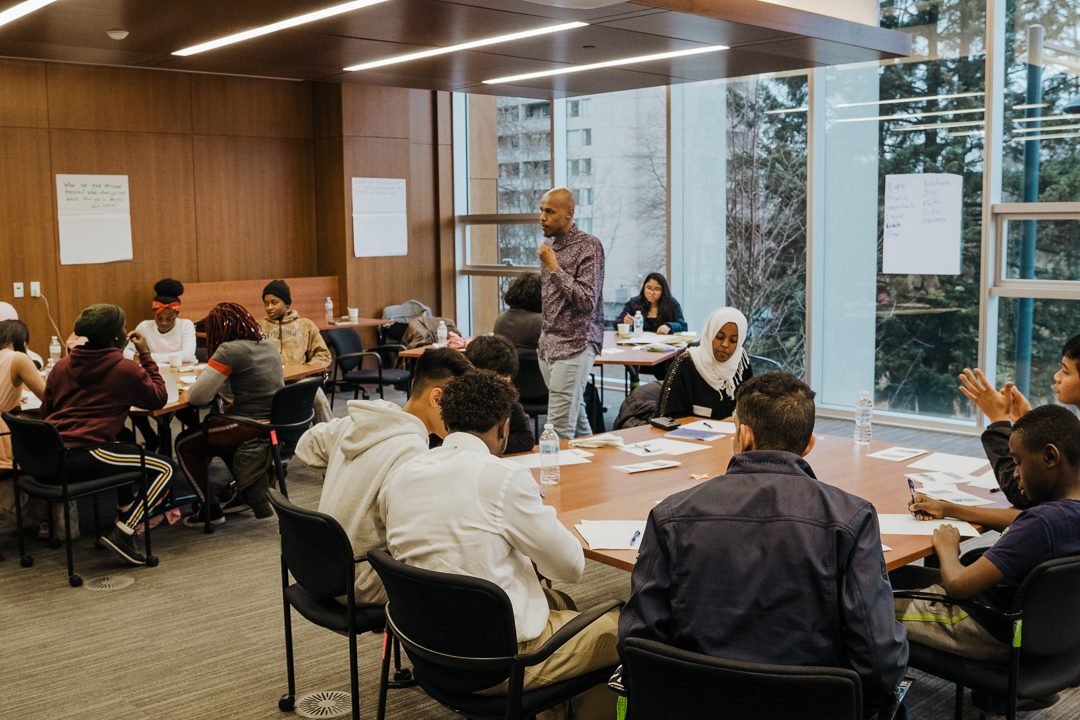
Every student already has a poem. I help them find it.
We start with what they know: the bus ride, the block, the language spoken at home. Then we shape it, revise it, and if they choose, we perform it.
Ways to learn
Three ways to work with me.
The teaching practice
Structure makes space for voice.
Begin with lived material
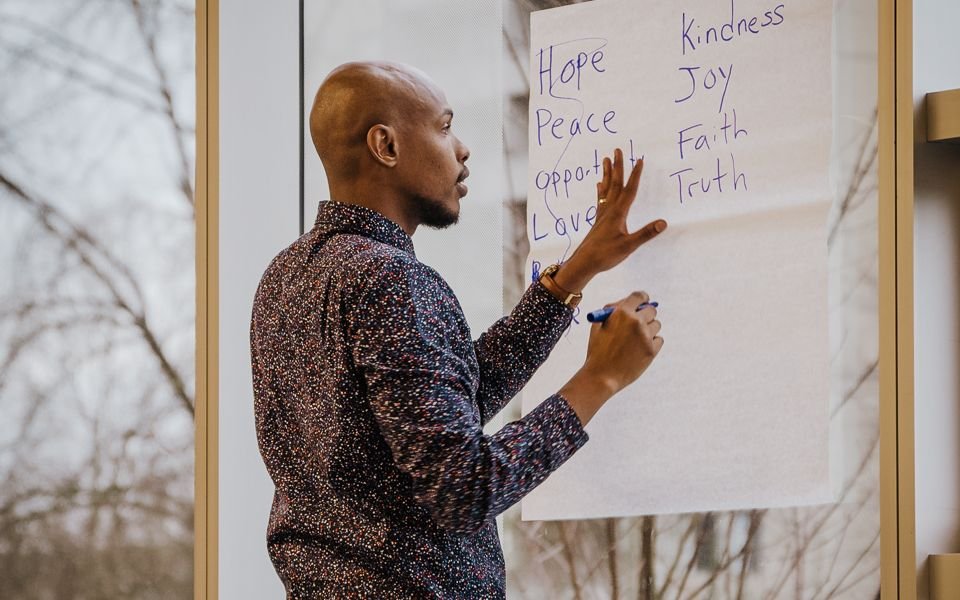
Students can draw from memory, place, language, family, culture, observation, and the details of everyday life. No one needs a grand subject before they can begin.
Make the abstract concrete
Images, senses, objects, and specific language help students move from an idea such as identity or belonging toward something a reader can see and feel.
Use a shape, then stretch it
Sentence frames, poetic forms, and modeled examples lower the barrier to starting. As confidence grows, students vary the structure and make it their own.
Revision before display
A first draft is material to work with. Students return to word choice, image, order, and sound before deciding what, if anything, they want to share.
Learning process
What students do.
- Notice: collect specific details, images, sounds, and memories.
- Name: put experience into the student’s own language.
- Shape: use a prompt, sentence frame, metaphor, or form to build a draft.
- Revise: strengthen image, clarity, order, sound, and intention.
- Share by choice: read, display, perform, or keep developing the work according to the student and the context.
An example
Belvedere Elementary, 2025.
From April 1 to 14, 2025, I worked with 297 K–6 students: 70 teaching sessions and 47.3 total program hours across 10 grade and program levels.
Practical questions
Choose the format that fits the learning goal.
What is the difference between a workshop and a residency?
A workshop is a focused session or short sequence. A residency creates time for repeated practice, revision, coordination across classes, and an optional school sharing process.
Does every student have to perform?
No. Performance is a supported option, and it is never required. The form of sharing should fit the student, group, and setting.
What should an educator include in an enquiry?
Include the grade range, number of groups, location, preferred dates, learning goals, and whether you are considering one visit, multiple sessions, or a residency.
Start with the students
Plan the right teaching format.
Share the audience, grade range, number of groups, location, dates, and the kind of experience you want to create.